Neurophysiological Biomarker Toolbox (NBT)
An open-source MATLAB toolbox for the computation and integration of neurophysiological biomarkers based on EEG and MEG recordings.
Simon-Shlomo PoilOn this page
The Neurophysiological Biomarker Toolbox (NBT) is an open-source MATLAB toolbox for the computation and integration of neurophysiological biomarkers. NBT offers a pipeline from data storage to statistics — including artefact rejection, signal visualisation, biomarker computation, statistical testing, and biomarker databasing.
NBT was designed to make biomarker research easier at all levels: from computing individual biomarkers on a single recording, to integrating multiple biomarkers across large datasets for classification and prediction.

The NBTwiki tutorial website (nbtwiki.net) is no longer maintained. This page serves as the current reference for NBT.
Key features#
NBT provides a standardised framework for EEG/MEG biomarker research. The toolbox includes biomarkers across multiple domains — spectral, temporal, and spatial — and allows easy implementation of new biomarkers through a consistent data structure. The NBT elements database stores biomarker data and associated metadata in a well-defined semantic format, enabling cross-study comparison and integrative analysis.
NBT works as a plugin to the open-source MATLAB toolbox EEGLAB.
Downloads and code#
GitHub repository: NBT-Analytics/NBTpublic
MATLAB File Exchange: DFA implementation
Tutorials#
The tutorials that began on the NBT wiki, now on this site with MATLAB and Python code:
- Detrended Fluctuation Analysis (DFA): A Tutorial: How to compute detrended fluctuation analysis (DFA) on the amplitude envelope of neuronal oscillations, in Python with crosci or in MATLAB with NBT.
Background#
I started developing NBT in 2008 during my PhD at VU University Amsterdam, together with Klaus Linkenkaer-Hansen. The developer team later grew to include Rick Jansen, Richard Hardstone, Sonja Simpraga, and Giuseppina Schiavone, with contributions from many others.
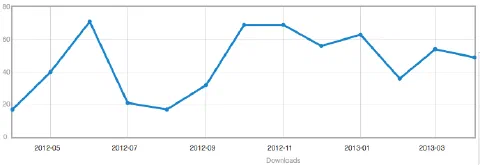
The toolbox and its tutorial website served as a core teaching tool in courses at VU University Amsterdam, including the Human Neurophysiology course (approximately 100 students per year). By 2016, NBT had more than 1,400 registered users and over 15,600 downloads.
From 2014 to 2017 I worked at NBT Analytics, which I co-founded as a spin-off company from VU Amsterdam. It provides commercial EEG analysis for clinical trials using the NBT framework, with analyses conducted under ICH-GCP quality-assurance standards.
The deeper story of NBT — how building a reusable measurement infrastructure turned out to be as important as the algorithms themselves — is part of my research background.
Publications using NBT#
Citation counts from OpenAlex, November 2026.
- Hardstone R, Poil SS, et al. (2012) Detrended fluctuation analysis: A scale-free view on neuronal oscillations. Frontiers in Physiology 3:450. — 566 citations
- Poil SS et al. (2012) Critical-state dynamics of avalanches and oscillations jointly emerge from balanced excitation/inhibition in neuronal networks. J Neurosci 32:9817–9823. — 401 citations
- Poil SS et al. (2013) Integrative EEG biomarkers predict progression to Alzheimer’s disease at the MCI stage. Front Aging Neurosci 5:58. — 228 citations
- Poil SS et al. (2014) Age dependent electroencephalographic changes in ADHD. Clin Neurophysiol 125:1626–1638. — 120 citations
- Simpraga S et al. (2017) EEG machine learning for accurate detection of cholinergic intervention and Alzheimer’s disease. Sci Rep 7:5775. — 82 citations
- Diaz BA et al. (2013) The Amsterdam Resting-State Questionnaire reveals multiple phenotypes of resting-state cognition. Front Hum Neurosci 7:446. — 209 citations
For a full list, see the Publications page or my Google Scholar profile.
External references#
- Wikipedia: Neurophysiological Biomarker Toolbox
- NITRC: NBT
- Research Resource Identifier: RRID:SCR_009612
- NBT Analytics